
Tuesday, October 27, 2015


Sunday, October 25, 2015





Saturday, October 24, 2015

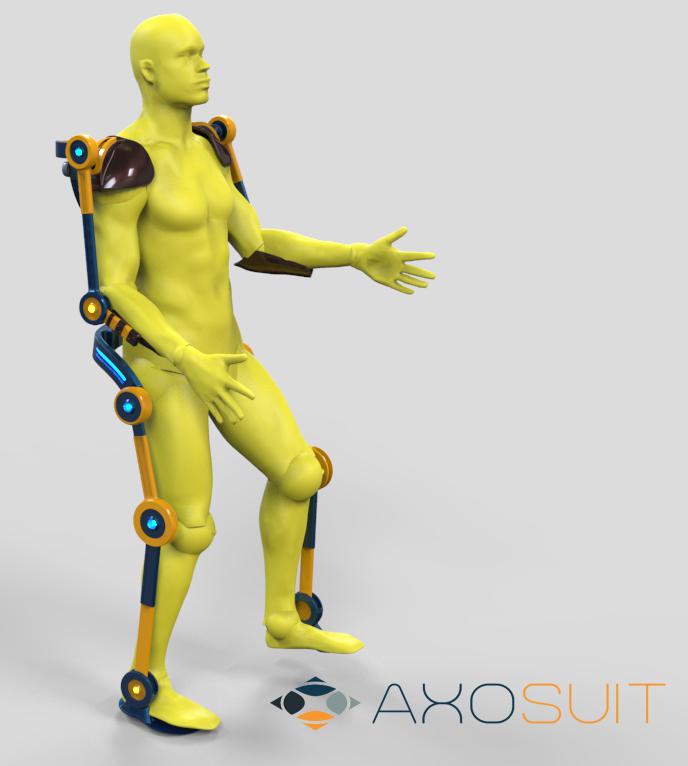
Robot Skeletons keep elderly active


Friday, October 23, 2015
Habits Proven to Make You Happier
“You are good enough!” Self-acceptance is a key happy habit, yet it’s one people practise the least.
A
new survey of 5,000 people has found a strong link between
self-acceptance and happiness, despite the fact that it’s a habit not
frequently practised.
For their survey, they identified ten everyday habits which science has shown can make people happier.
Here are the 10 habits, with the average ratings of survey participants on a scale of 1-10, as to how often they performed each habit:
- Giving: do things for others — 7.41
- Relating: connect with people — 7.36
- Exercising: take care of your body — 5.88
- Appreciating: notice the world around — 6.57
- Trying out: keep learning new things — 6.26
- Direction: have goals to look forward to — 6.08
- Resilience: find ways to bounce back — 6.33
- Emotion: take a positive approach — 6.74
- Acceptance: be comfortable with who you are — 5.56
- Meaning: be part of something bigger — 6.38
(You’ll notice that the first letters spell out the words GREAT DREAM.)
The survey showed that one of the largest associations between these happy habits and reported happiness was for self-acceptance.
This category, though, got the lowest rating for people actually performing the habit, with an average of only 5.56.
Top of the list of happy habits that people performed was ‘giving’.
In this category, one in six reported a 10 out of 10; just over one-third scored an 8 or 9; slightly fewer scored 6 or 7; and less than one in six (15%) rated themselves at 5 or less.
One of the psychologists involved, Professor Karen Pine said:
“Practising these habits really can boost our happiness. It’s great to see so many people regularly doing things to help others — and when we make others happy we tend to feel good ourselves too.
This survey shows that practising self-acceptance is one thing that could make the biggest difference to many people’s happiness.
Exercise is also known to lift mood so if people want a simple, daily way to fee happier they should get into the habit of being more physically active too.”
Increase your self-acceptance
Here are three ways to boost your self-acceptance, as suggested by the researchers:
“1. Be as kind to yourself as you are to others. See your mistakes as opportunities to learn. Notice things you do well, however small.
2. Ask a trusted friend or colleague to tell you what your strengths are or what they value about you.
3. Spend some quiet time by yourself. Tune in to how you’re feeling inside and try to be at peace with who you are.”
Related articles:
10 Simple Habits Proven to Make You Happier
Dr Jeremy Dean is a psychologist and the author of PsyBlog and HealthiestBlog.com.
His latest book is "Making Habits, Breaking Habits: How to Make Changes That Stick".
You can follow PsyBlog by email, by RSS feed, on Twitter and Google+.
Link: http://www.spring.org.uk/2014/03/10-simple-habits-proven-to-make-you-happier.php
New hope for the treatment of multiple sclerosis
Public Release:
New hope for the treatment of multiple sclerosis
A new study led by researchers at the
Montreal Neurological Institute and Hospital of McGill University and
the MUHC, gets closer to identifying the mechanisms responsible for
multiple sclerosis and makes headway in the search for better treatments
This news release is available in French.
Modern scientific understanding has considered multiple sclerosis (MS) to be a disease controlled by the T cell, a type of white blood cell. Research has shown that in MS, T cells inappropriately attack myelin, the protective layer of fat covering nerves in the central nervous system, exposing them to damage.
Emerging studies have also discovered that B cells, another type of white blood cells that had previously been overlooked in MS, are significant contributors to the disease. Recent clinical trials revealed that B cell depletion Therapy (BCDT) in people with relapsing-remitting MS led to dramatic decreases in new disease activity. But how B cells contribute to the disease and the molecular mechanisms involved in the benefit of BCDT has not been fully elucidated.
The study by Dr. Amit Bar-Or at the Montreal Neurological Institute and Hospital and colleagues and published in the October issue of Science Translational Medicine, provides groundbreaking insight into the role of B cells and their complex interaction with other immune cells in the context of MS.
"We've recently discovered that different types of human B cells exist. Some B cells have been shown to promote inflammation, while others are actually able to limit inflammation.
Our study has implicated a subset of B cells, the GM-CSF producing B cells, as a key contributor in the pro-inflammatory immune cells responses at play in MS," explained Dr. Amit Bar-Or, Director of the Experimental Therapeutics Program and Scientific Director of the Clinical Research Unit, at the Montreal Neurological Institute and senior author of the study.
The study first examined samples of MS patients comparing them to healthy subjects. Researchers discovered that GM-CSF producing B cells were more frequent and more prone to activation in MS patients. This subset of B cells was able to activate pro-inflammatory responses of myeloid cells of the immune system Confirming these results in patients, the researchers found that after B cell depletion Therapy (BCDT), the myeloid cells became much less pro-inflammatory, suggesting that BCDT may work in part by decreasing the number of GM-CSF-producing B cells and in turn limiting both myeloid cell and T cell contribution to new disease activity.
"The study is significant in discovering a new way by which B cells can contribute to abnormal immune responses in MS which reinforces the rationale for the use of B cell depletion therapy. Furthermore, better identifying the particular subset of B cells responsible for new disease activity, we can look forward to more selectively targeting the "bad" B cells while leaving "good" B cells intact. This is important because B cells normally play key roles in our immune system, so more selective therapies offer the prospect of decreasing the risk of impairing the patients' immune system in the long run."
An estimated 100,000 Canadians live with multiple sclerosis; there is currently no cure for the disease. This study shows promise for the development of the next generation of targeted treatments that could one day provide a cure for this debilitating disease.
###
About multiple sclerosis and the MS Society of Canada
Canada has the highest rate of multiple sclerosis in the world. MS is a chronic, often disabling disease of the central nervous system comprising the brain, spinal cord and optic nerve. It is the most common neurological disease of young adults in Canada. Most people with MS are diagnosed between the ages of 15 and 40, and the unpredictable effects of MS last for the rest of their lives. The MS Society provides services to people with MS and their families and funds research to find the cause and cure for this disease.
Source http://www.
About the Multiple Sclerosis Scientific Research Foundation
The Multiple Sclerosis Scientific Research Foundation funds large, innovative, multi-centre collaborative studies that will lead to major advances in the field of multiple sclerosis. A unique Canadian resource, the Foundation's main funding source is the MS Society of Canada. Source http://www.
The Neuro
The Montreal Neurological Institute and Hospital -- The Neuro, is a unique academic medical centre dedicated to neuroscience. Founded in 1934 by the renowned Dr. Wilder Penfield, The Neuro is recognized internationally for integrating research, compassionate patient care and advanced training, all key to advances in science and medicine. The Neuro is a research and teaching institute of McGill University and forms the basis for the Neuroscience Mission of the McGill University Health Centre. Neuro researchers are world leaders in cellular and molecular neuroscience, brain imaging, cognitive neuroscience and the study and treatment of epilepsy, multiple sclerosis and neuromuscular disorders.
For more information, visit theneuro.com.
New drug called ‘groundbreaking’ in multiple sclerosis fight
Created: 10/21/2015 4:37 PM WNYT.com
By: Benita Zahn
Around 250,000 to 300,000 people in the United States Have multiple sclerosis.
A new drug awaiting FDA approval, has been called groundbreaking and it's being studied locally.
“Everything was getting cloudy, like I was in heaven. I could only see like a part of somebody's face like a circle, a chin an eye. I couldn't see the whole face. Then I started to panic,” recalled Mary Allen, an MS patient.
The loss of vision came out of the blue for Allen.
Diagnosed in 2005 with multiple sclerosis, she'd been doing so well that she'd gone of her medication.
Her daughter Alyssa was 5-year-old when the attack hit.
Traditional multiple sclerosis drugs failed to stop the vision loss.
It got so bad, she couldn't even read the big “E” on the eye chart.
That all changed when she joined a drug trial at the MS Center of Northeastern New York - one of six sites in New York testing a new drug - Ocrelizumab.
Multiple Sclerosis is a chronic and progressive disease of the nervous system. For reasons that aren't clear, the immune system, rather than protect, attacks the myelin sheath that protects certain nerve fibers.
As those fibers lose their protection, disease symptoms, including vision loss, appear.
“It affects lymphocytes that are of a B cell subtype that are a kind of master surveillance cells for tissue protection,” explained Dr. Keith Edwards, of the Multiple Sclerosis Center of Northeastern New York. “The lymphocyte in a disease like MS attack the myelin, not just the germs.”
Ocrelizumab, the new drug, goes after, what Dr. Edwards calls, misguided lymphocytes.
The results, while not for everyone, have been impressive.
“So the reduction of attack rate was 46 percent. Reduction of new enhanced or new acute lesion was 94 percent on MRI,” Dr. Edwards explained. Moreover, it appears the drug may reverse some of the damage.
“I mean it's not perfect but it's way better than it was. I can drive again,” Allen pointed out.
“But when a person gets better in terms of their vision it's not like she's exercising more. This is probably remylination. But that has yet to be proven,” cautioned Edwards.
Ocrelizumab has been tested on patients suffering relapsing remitting MS, the most common form of the disease and also a more rare type that has no approved treatments yet, primary progressive.
It's administered by IV every six months. So far, Dr. Edwards says bad side effects have been minimal.
There are still a few hurdles for the drug to clear but it's on track to go to the FDA for approval early next year and if it gets the green light it would be available by 2018.
NewsChannel 13’s Benita Zahn will keep you posted.
Link: http://wnyt.com/article/stories/s3942450.shtml
Tuesday, October 20, 2015
Parkinson's patients taking cancer drug
Parkinson's patients show improvement after taking cancer drug
Some of the improvements were dramatic.
Researchers at Georgetown University Medical Center on Saturday revealed what could be a major breakthrough in the treatment of Parkinson’s disease.A study unveiled at the Society for Neuroscience’s annual meeting found that 11 patients with Parkinson’s disease with dementia who were given nilotinib, an FDA-approved drug for leukemia that’s sold by Novartis as Tasigna, experienced improved cognition, motor skills and non-motor function in a 12-patient, six-month trial.
Fernando Pagan, a GUMC associate professor of neurology who directs the Movement Disorders Program at MedStar Georgetown University Hospital, said that to his knowledge, the study “represents the first time a therapy appears to reverse—to a greater or lesser degree depending on stage of disease—cognitive and motor decline in patients with these neurodegenerative disorders.”
In some patients, the results of the treatment were rather dramatic. A release from GUMC says that one patient who was confined to a wheelchair was able to walk again and that three other patients who could not speak were able to hold conversations.
One patient in the trial, Alan Hoffman, a professor emeritus of social science education at Georgia State University, was diagnosed with Parkinson’s disease in 1997. Before taking nilotinib, he said he didn’t do much around the house. “Now,” he told GUMC, “I empty the garbage, unload the dishwasher, load the washer and the dryer, set the table, even take responsibility for grilling.”
video link:
http://for.tn/1RkmFQc
Source: http://fortune.com/2015/10/19/cancer-drug-parkinsons/

Subscribe to:
Posts (Atom)